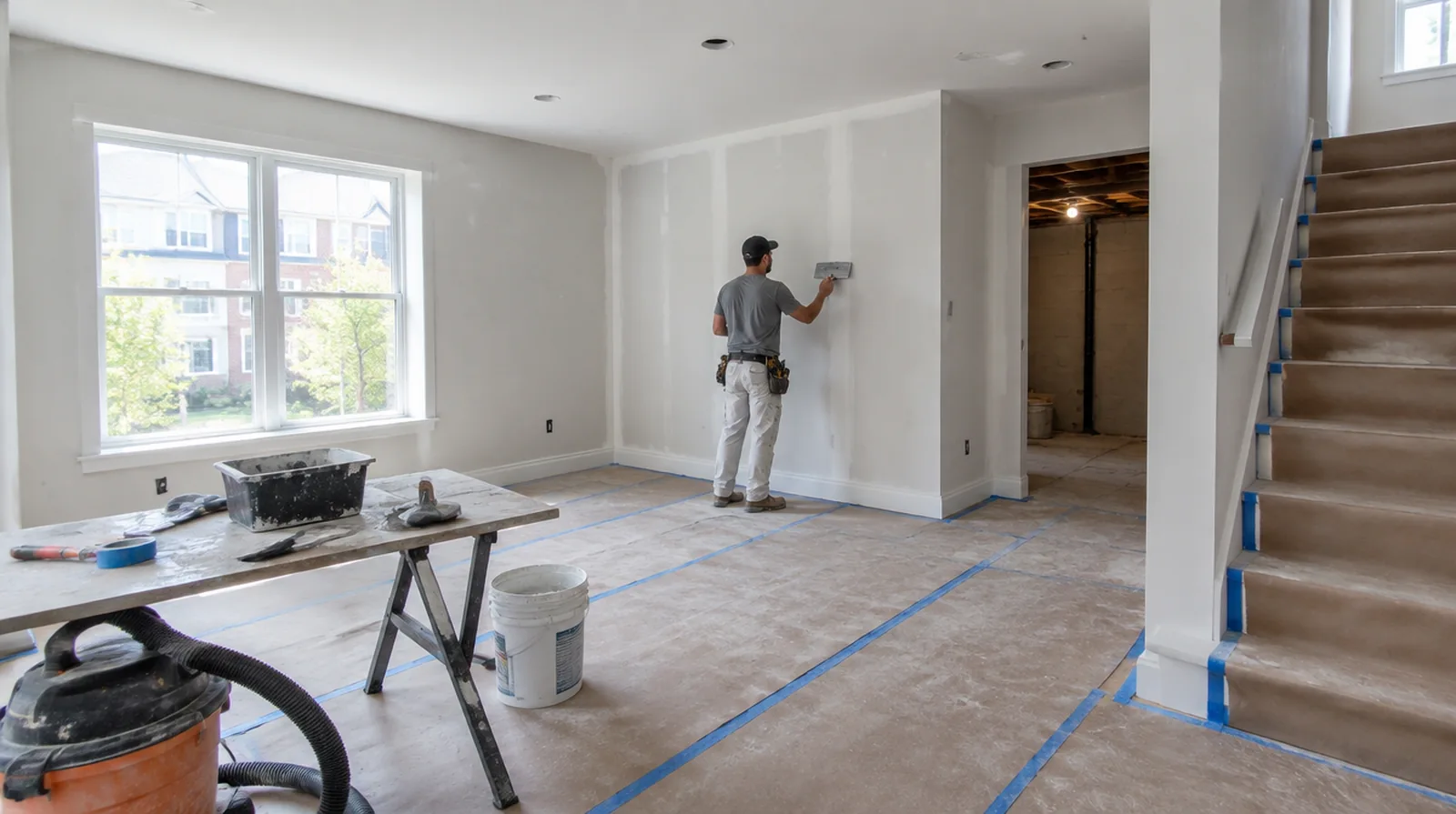
A plan built around the room, not only the patch
Planning drywall work in Germantown means connecting the visible surface to the assembly behind it. Germantown Drywall Company covers repair, new panel installation and the finishing choices that shape a room after decoration. A fresh coat of compound is not an answer to every defect: loose material, continuing leaks and recurring movement need their own decisions. Begin with a description of the problem and the appearance you want when the room returns to use. Then consider support, access and the condition of adjoining finishes. A well defined sequence makes it easier to compare methods without treating a small wall dent and a damaged ceiling as identical jobs.
Water Damage Drywall Repair: resolve the water source
Replacement drywall should follow correction of the leak, condensation or other source that caused the damage. A cosmetic cover will not stop water from entering the same assembly again. For this part of the project, note when it became noticeable and whether its appearance has altered across different seasons. See the water damage drywall repair guide for the scope questions, preparation stages and finishing decisions specific to that work.
Soundproof Drywall: coordinate electrical boxes
Electrical openings can become acoustic weak points, particularly where boxes align on opposite faces. Coordinate any changes with the electrical trade and preserve the requirements of the complete assembly. For this part of the project, include a wide room view as well as a close view so scale and surrounding finishes are understandable. See the soundproof drywall guide for the scope questions, preparation stages and finishing decisions specific to that work.
Drywall Finishing: cover fastener heads
Fill fastener depressions level with the surrounding face without creating unneeded mounds. A screw that protrudes or has broken the paper should be addressed before it is concealed. For this part of the project, resolve any required inspection before that opening is closed and the surface finishing begins. See the drywall finishing guide for the scope questions, preparation stages and finishing decisions specific to that work.
Skim Coating: inspect using side light
A surface can appear even under direct lighting while revealing shallow tool lines from the side. The review should reflect the conditions that will matter when the interior returns to everyday use. For this part of the project, measure the affected planes separately so the estimate can explain where each finishing treatment starts and stops. See the skim coating guide for the scope questions, preparation stages and finishing decisions specific to that work.
Texture Matching: protect surrounding finishes
Texture overspray can settle on trim, flooring and nearby fittings if they are not masked. Protect the full reach of the operation, including fittings and trim beyond the original damaged spot. For this part of the project, make sure their protection, surface finish and disposal allowances describe equivalent work before comparing the final prices. See the texture matching guide for the scope questions, preparation stages and finishing decisions specific to that work.
Drywall Installation: define the finish level
A proposal should distinguish attached panels from a completed finish prepared for decorative coatings. Strong side lighting or a glossy coating can justify more extensive finishing than a utility room. For this part of the project, plan temporary storage and the minimum working clearance before material is carried into the property. See the drywall installation guide for the scope questions, preparation stages and finishing decisions specific to that work.
Popcorn Ceiling Removal: plan cleanup and reopening
Allow for debris removal, drying and decorating instead of assuming the space is complete immediately after scraping. Review the agreed surface condition and cleanup before returning the space to normal use. For this part of the project, plan drying conditions alongside dust protection and the comfort of people occupying neighboring spaces. See the popcorn ceiling removal guide for the scope questions, preparation stages and finishing decisions specific to that work.
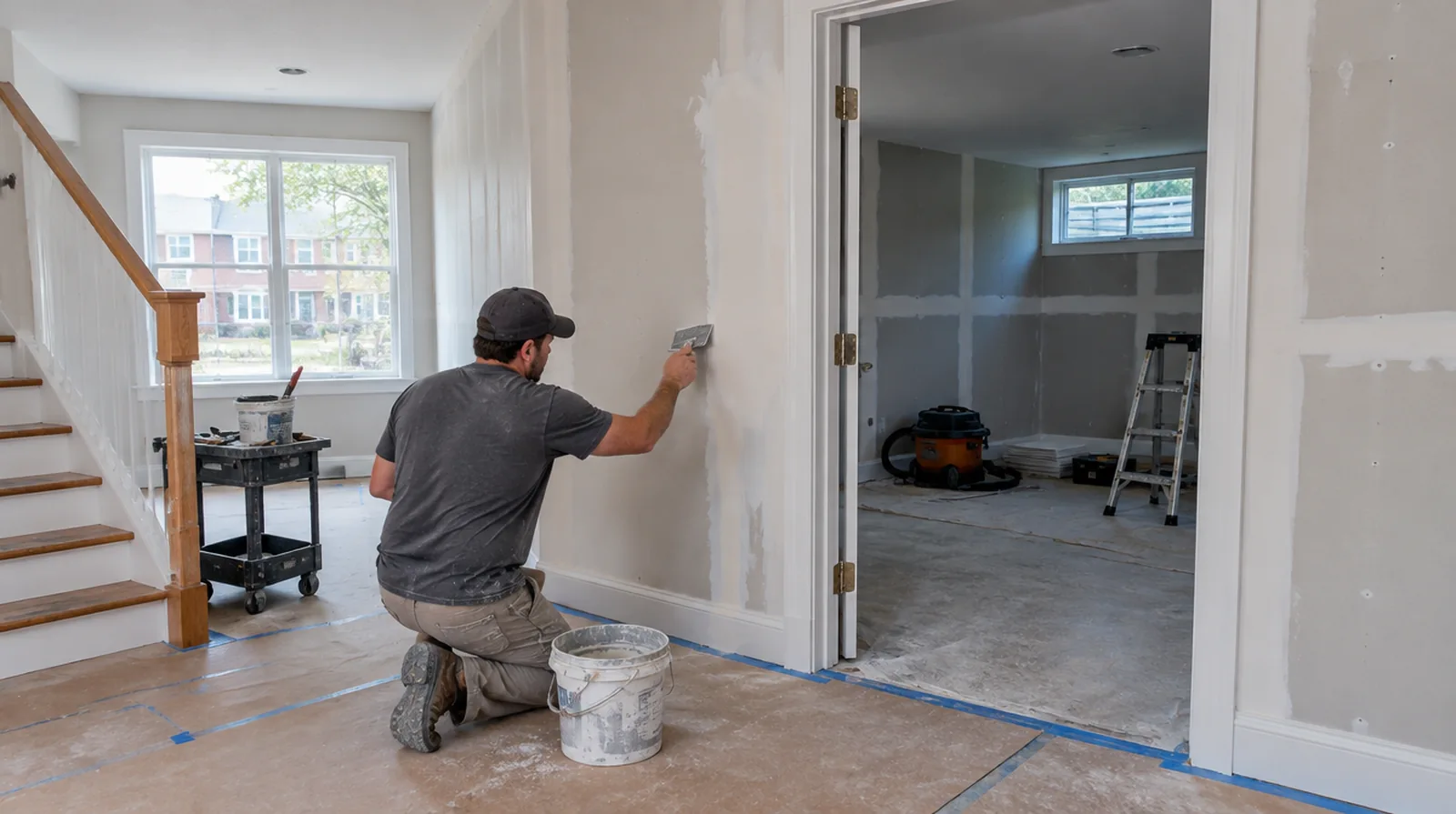
Drywall Repair: build thin finishing coats
Shaping a repair through thinner coats gives more control than depositing all the material at once. Judge the previous layer only after it has dried adequate for the next operation. For this part of the project, clarify whether removal is included or whether the finish will terminate at the accessible edge. See the drywall repair guide for the scope questions, preparation stages and finishing decisions specific to that work.
Commercial Drywall: define the tenant scope
A commercial partition project needs a well defined plan for room layout, access and the intended use of each space. Separate owner responsibilities from tenant responsibilities so the proposal covers a defined package of work. For this part of the project, include the later primer and paint stages in the timetable as well as drywall installation and finishing. See the commercial drywall guide for the scope questions, preparation stages and finishing decisions specific to that work.
Ceiling Repair: separate fixtures from board work
Handling lights, sprinkler fittings and air grilles may require suitable trades and building coordination. Clarify who disconnects and reinstalls anything that interferes with access to the damaged area. For this part of the project, settle the sequence with flooring, trim and cabinet work before setting a final finishing date. See the ceiling repair guide for the scope questions, preparation stages and finishing decisions specific to that work.
Access and drying conditions in Germantown
Think through the daily use of the property while planning townhome and basement updates. Questions about end-unit stairs and HOA common areas can change the setup even when the visible repair is small. In Germantown, humid summers and cold winters makes it sensible to review the room environment rather than rely on an automatic overnight drying assumption. Access, protection and coat readiness each belong in the sequence. For finishing lower levels in townhome rows, confirm who evaluates the condition before it is covered and what happens if the first inspection reveals more work. A delivery route, a safe storage location and an agreed work boundary help the renovation proceed without treating the rest of the building as an unplanned material staging area.
Compare the same finishing boundary
Price has context only when the intended result is described clearly. Check whether the work ends with hung board, finished joints or a surface ready for decoration. Review the support at replacement edges and the amount of surrounding material included in the blend. Then discuss the parts that are easily overlooked: access preparation, cleanup, primer and the work of disconnecting or reinstating fittings. Some of those tasks may belong to another trade, which is useful to know before a start date is agreed. An unexpected condition should be assessed openly and added to the scope only after its effect has been explained.
Arrange the information before the next step
Before the next project discussion, collect information that helps distinguish the symptom from its history. Show the whole wall or ceiling as well as the damaged spot, give rough dimensions and note changes over time. Mention any recent work nearby and whether the surface has been patched before. Include the finish you want after painting and the parts of the property that need to remain usable. A photograph supports a conversation but cannot verify everything inside a cavity. For address and service area information, use the contact page. The form sends project requests for review; please do not include sensitive information.
Read about the project approach or view contact and planning details.
More planning details for Germantown
Narrow stairs between three levels of a townhome can make shorter sheets the practical choice. Leaving a small gap above the slab helps lower-level drywall in Germantown basements resist wicking. Painting the full wall after a repair helps hide the edge between new compound and older layered paint.