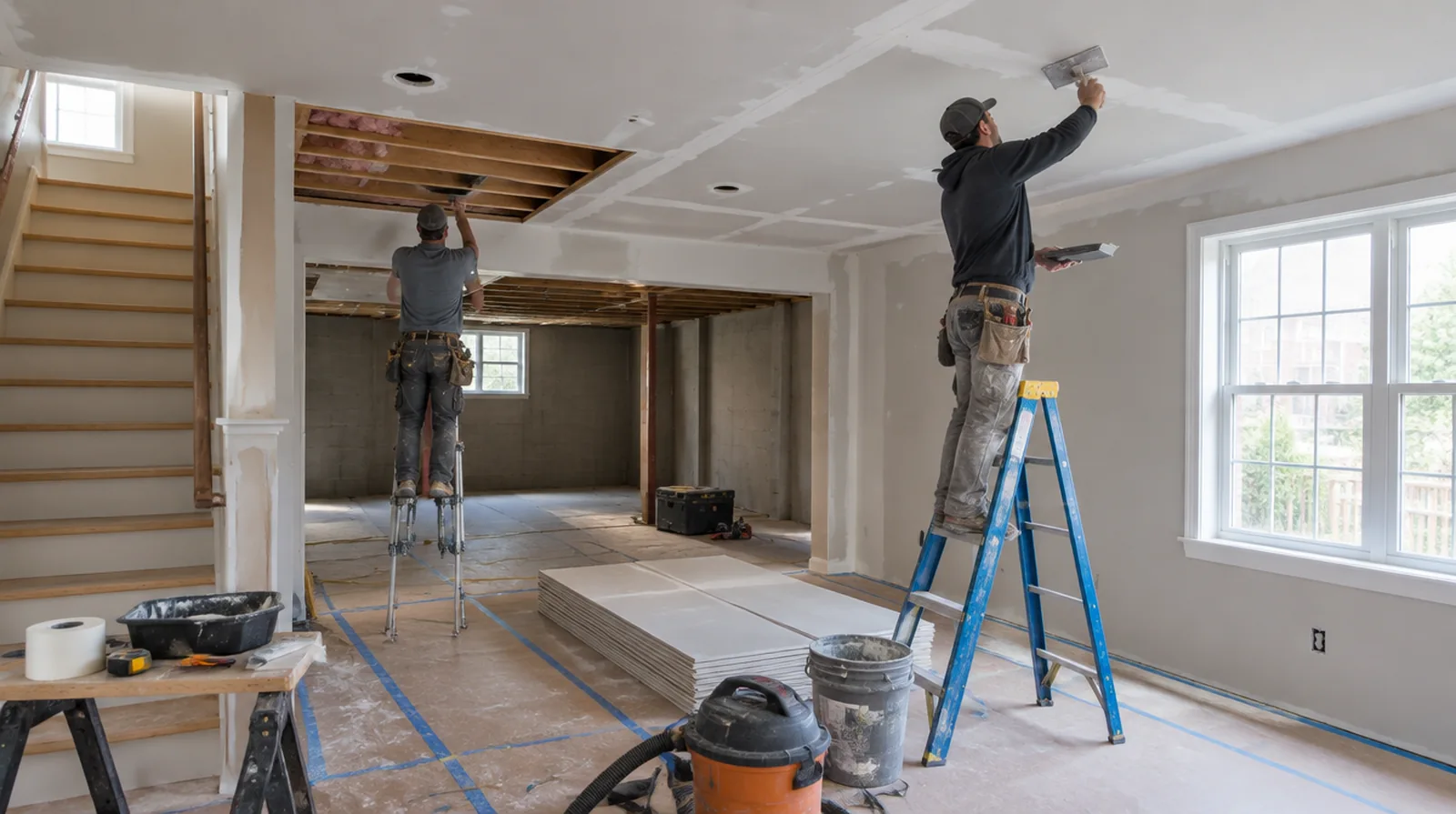
Separate fixtures from board work
Electrical fittings, sprinkler components and mechanical grilles can involve other trades or building approvals. Assign removal and reinstatement responsibilities for any fitting that blocks safe repair access. When a wall has repeated defects, keep a record of earlier repair attempts so a new assessment does not simply repeat an unsuccessful approach.
Cut back to sound material
Water softened gypsum and loose edges do not provide a dependable base for a new patch. The removal boundary should reach stable material and allow the replacement to be properly supported. While a removed panel exposes the wall surface cavity, complete the necessary review of concealed work before replacement board closes the opening.
Check the source of damage
A noticeable overhead mark may be evidence of a problem in a service or space above the space. The cause needs resolution before cosmetic repair can reasonably be expected to last. Where a surface has been painted many times, consider whether differences in texture or sheen will require a wider decorative treatment.
Discuss texture expectations
Determine whether the restored area ought to be smooth or carry an existing decorative pattern. A representative sample makes it easier to judge whether the existing pattern can be blended locally. For an older repair with no clear history, describe when the mark first appeared and whether it has changed through more than one season.
Identify the existing surface
Check whether the overhead finish is gypsum board, plaster or a mixture of older layers. The right repair depends on that actual construction instead of the color of its painted face. When the wall has strong reflected light, look at the full plane instead of judging only the narrow strip immediately beside the patch.
Set the repainting scope
A small fresh white patch can stand out against an older ceiling even when the surface is level. Painting to a natural boundary may be preferable to touching up only the repair. At an edge beside built in furniture, state whether the obstruction will be removed or whether finishing stops at the section that can be reached.
Review the room after drying
Once the coats are dry, view the ceiling from normal room positions and near its principal windows. Identify outstanding paint preparation while protection and access are still available. When more damage could be hidden, ask how any added scope will be documented before extra material is removed or replaced.
Evaluate sagging sections
A sagging ceiling needs its supports, fixings and damaged materials assessed, not simply smoothed. Avoid using the area beneath a potentially unstable section until it has been evaluated appropriately. For a room with restricted airflow, plan drying conditions alongside dust protection and the comfort of people occupying neighboring spaces.
Address isolated stains
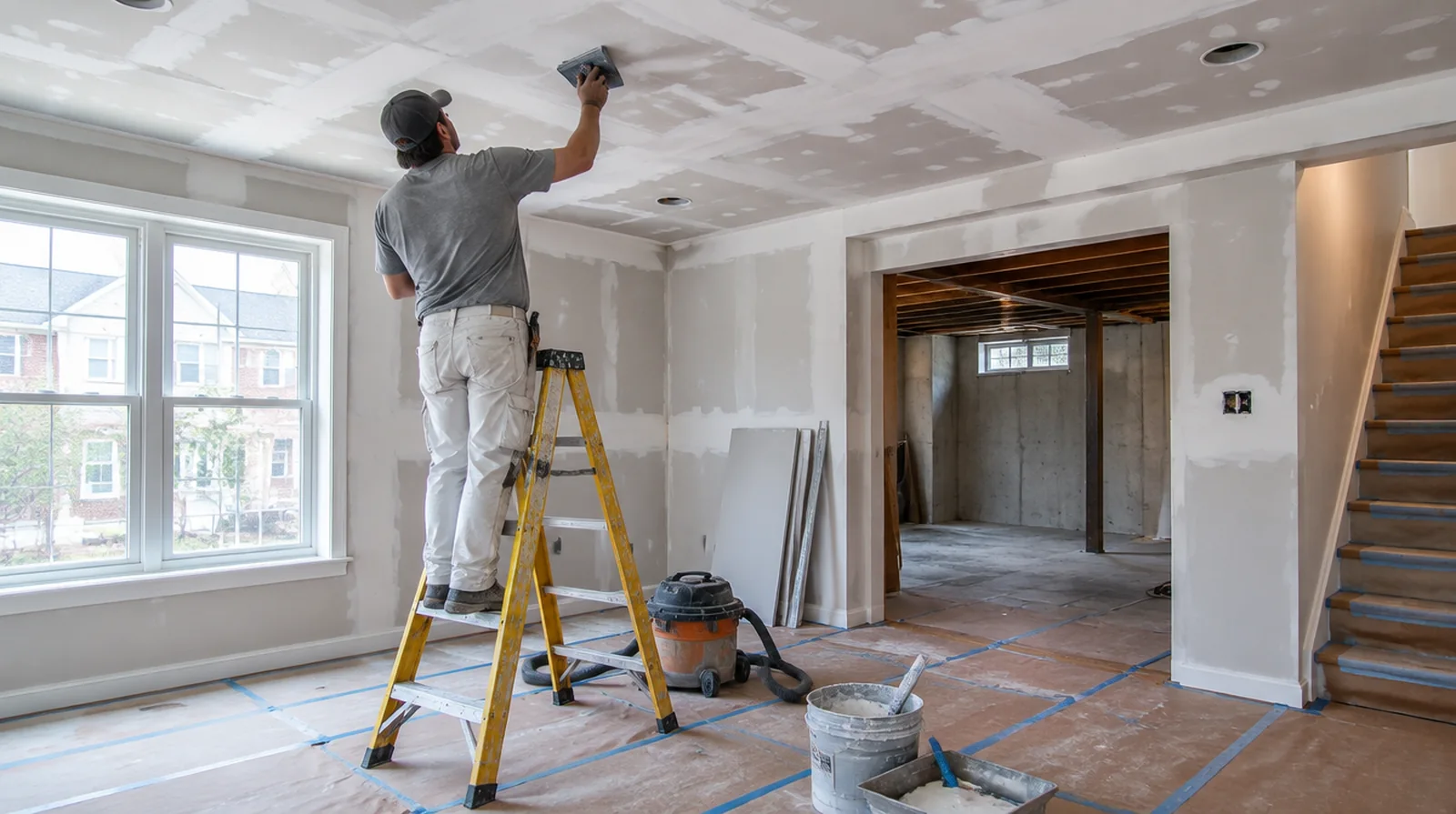
A dry repaired ceiling may still need a compatible stain blocking primer before decorative paint. Primer selection depends on the remaining discoloration and ought not to be used to conceal active moisture. When reviewing the finished work, use the agreed lighting and natural room viewpoints so the assessment reflects the intended use of the space.
Plan overhead access
Plan suitable overhead working access around the space height and its contents. Large fixtures and delicate flooring can influence setup time more than the size of the damaged spot. For a surface that will receive wall covering, share the product requirements early so the finishing stage supports the planned decorative treatment.
Project context in Germantown
Winter forced-air heat in Germantown can dry rooms quickly and open seams along upper ceilings. Germantown townhomes often have finished basements where any foundation moisture should be fixed before board is replaced.
Scope questions before finishing
For a repair that crosses several surfaces, measure the affected planes separately so the estimate can explain where each finishing treatment starts and stops.
For a small repair with extensive setup, compare the total scope instead of assuming the price should follow the hole dimensions alone.
When comparing competing estimates, make sure their protection, surface finish and disposal allowances describe equivalent work before comparing the final prices.
For a room with restricted airflow, plan drying conditions alongside dust protection and the comfort of people occupying neighboring spaces.
When painting is outside the proposal, describe the remaining decorative preparation clearly so another contractor can price that stage accurately.
At a ceiling or wall containing fittings, assign removal and reinstatement duties for the affected devices before repair access is needed.
For a project with several trades, agree which inspection or handover point must happen before the next person starts work.
When the history of a repair is uncertain, note when it became visible and whether its appearance has altered across distinct seasons.
Where the quoted work stops before painting, request a clear description of what remains so the next decorating stage can be priced realistically.
In a room with little free floor space, identify temporary storage for belongings and establish sufficient clearance for the work before delivery.
Where occupants have dust sensitivity concerns, agree containment and cleaning measures before settling the way the interior will be staged.
While a removed panel exposes the wall cavity, complete the necessary review of concealed work before replacement board closes the opening.
Explore the Germantown drywall overview for related options, or read the project planning information before arranging the next stage.
More planning details for Germantown
Humid Montgomery County summers keep basements damp enough to slow drying without a dehumidifier. End-unit townhomes have more exterior walls and windows, which can mean more seasonal cracking near openings. Narrow stairs between three levels of a townhome can make shorter sheets the practical choice.