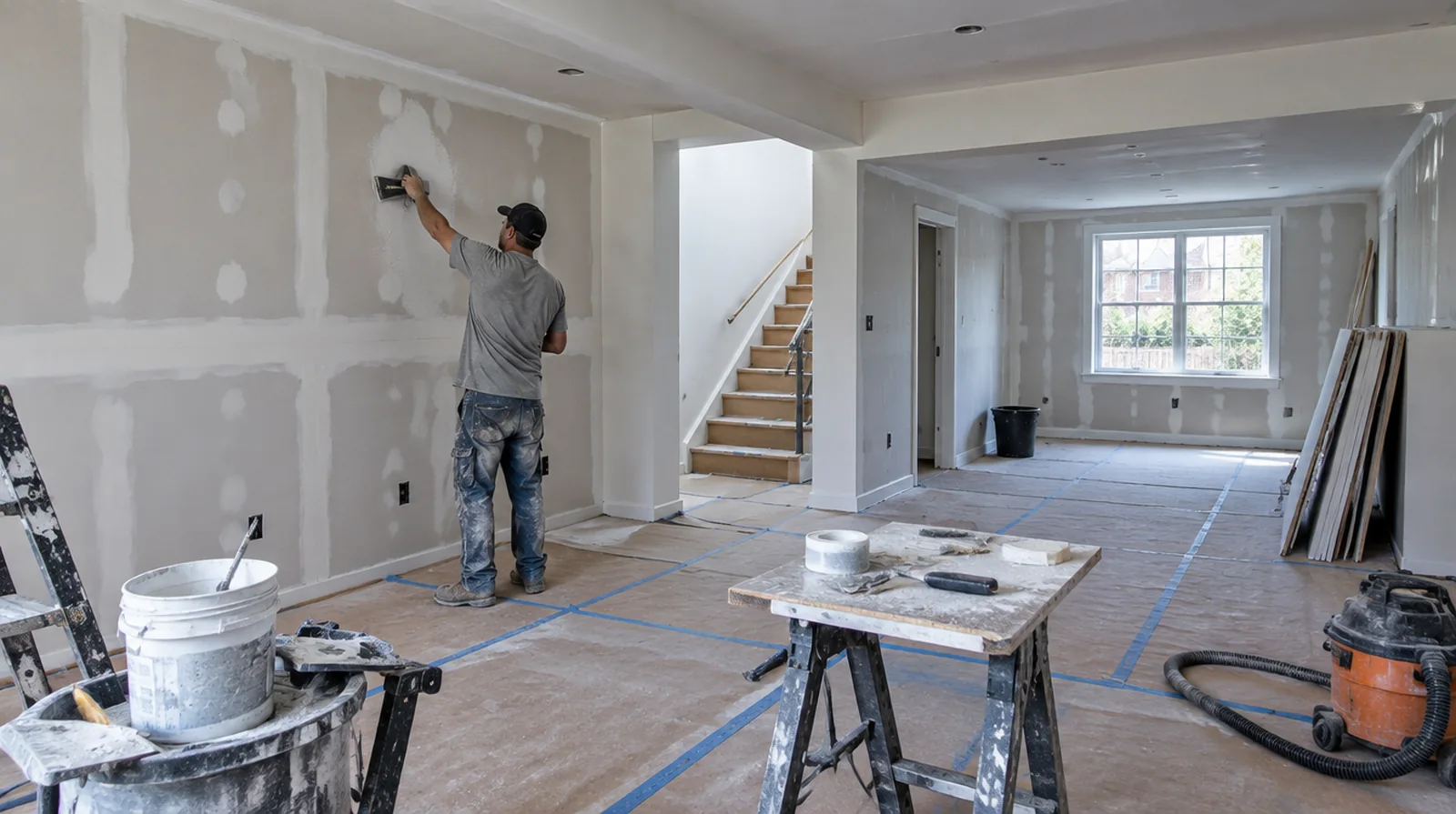
Study the paint layers
Repeated painting can soften an old pattern and change how its peaks reflect light. A fresh application could need adjustment to resemble the current surface instead of the original texture recipe. If the existing finish is unusual, keep a small reference sample or a close photograph to support the discussion about blending and restoration.
Allow time before painting
Let a new texture become ready for decoration rather than applying paint onto soft material. The quote should explain whether the next decorating stage is included or left to a painter. When the same defect has returned, share information about previous repair methods so the next assessment can consider why they did not last.
Protect surrounding finishes
Mask adjacent materials against sprayed compound and other application debris. The protection plan should cover the actual application area rather than only the original hole. Where light reflects along the wall, inspect the complete plane instead of limiting the review to the edge immediately next to the repaired section.
Identify the existing pattern
Orange peel, knockdown and hand applied textures create differing depths and shadow lines. Examine the surface in the light the space actually receives before choosing a spray or hand applied method. When painting is outside the proposal, describe the remaining decorative preparation clearly so another contractor can price that stage accurately.
Use appropriate primer
New texture and adjacent painted material can absorb finish coats at different rates. A suitable primer helps the paint system perform consistently without changing the texture profile unnecessarily. When painting is outside the proposal, describe the remaining decorative preparation clearly so another contractor can price that stage accurately.
Consider hand applied surfaces
For a troweled pattern, the tool movement and the spacing between its marks matter. A representative trial is useful when there is no standard machine setting that reproduces the existing finish. Where a future fixture will be installed, coordinate any required backing while the cavity is accessible instead of reopening the completed wall.
Prepare a sample area
Use a limited trial to compare the scale, distribution and flattening of the proposed finish. Approve the sample before extending the treatment across the entire repaired area. If materials must cross common building areas, plan the protection and access route so other occupants are not needlessly obstructed by deliveries.
Set realistic blend expectations
Age, paint buildup and irregular original application can limit how closely a patch can blend. If local matching remains obvious, discuss whether a wider surface treatment would be preferable. For a project involving a building manager, confirm access hours and protection requirements before promising a start date or a short completion window.
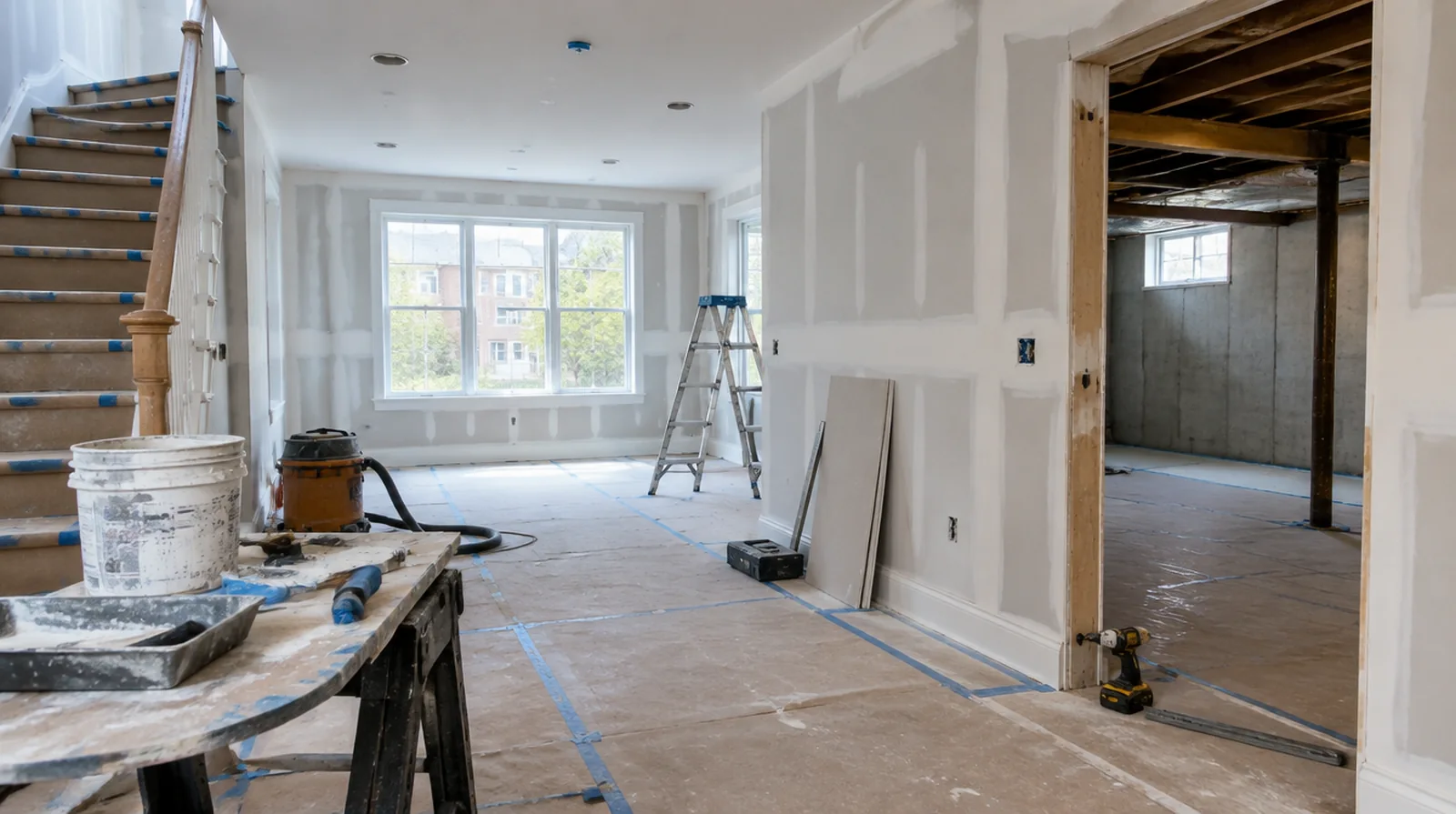
Blend beyond the patch
An abrupt rectangular texture boundary often draws attention even when the pattern itself is close. Feathering the application into adjacent sound substrate can soften the transition around the repair. If there is a fixed move in date, reserve adequate time for the coating stages after drywall work instead of counting only the installation period.
Control application conditions
Spray settings, material consistency and working distance all influence the resulting texture. Room conditions and drying rate also influence when a knockdown pass ought to be made. If occupancy must resume on a certain day, include the later primer and paint stages in the timetable as well as drywall installation and finishing.
Project context in Germantown
Humid Montgomery County summers keep basements damp enough to slow drying without a dehumidifier. Winter forced-air heat in Germantown can dry rooms quickly and open seams along upper ceilings.
Scope questions before finishing
If there is a fixed move in date, reserve adequate time for the coating stages after drywall work rather than counting only the installation period.
At an edge beside built in furniture, state whether the obstruction will be removed or whether finishing stops at the section that can be reached.
When the same defect has returned, share information about previous repair methods so the next assessment can consider why they did not last.
If a household member is sensitive to dust, discuss containment and cleaning expectations before choosing how to stage the space work.
When the decorative coating has been selected, tell the finisher its intended sheen and color while the preparation of the surface standard is still being agreed.
When the work area includes a doorway, check the clearance for panel movement as well as the amount of space available for finishing tools.
If the ceiling or wall includes fittings, identify the person responsible for removing and reinstalling each item before the work begins.
When comparing competing estimates, make sure their protection, surface finish and disposal allowances describe equivalent work before comparing the final prices.
If the current finish is unusual, keep a small reference sample or a close photograph to support the discussion about blending and restoration.
For a room with restricted airflow, plan drying conditions alongside dust protection and the comfort of people occupying neighboring spaces.
When reviewing the finished work, use the agreed lighting and natural room viewpoints so the assessment reflects the intended use of the space.
For an initial assessment from pictures, provide an overall room photograph and a detailed view of the defect so both context and scale are apparent.
Explore the Germantown drywall overview for related options, or read the project planning information before arranging the next stage.
More planning details for Germantown
Germantown townhomes often have finished basements where any foundation moisture should be fixed before board is replaced. End-unit townhomes have more exterior walls and windows, which can mean more seasonal cracking near openings. Many Germantown homes from the 1980s have been repainted several times, which affects how a patch blends.