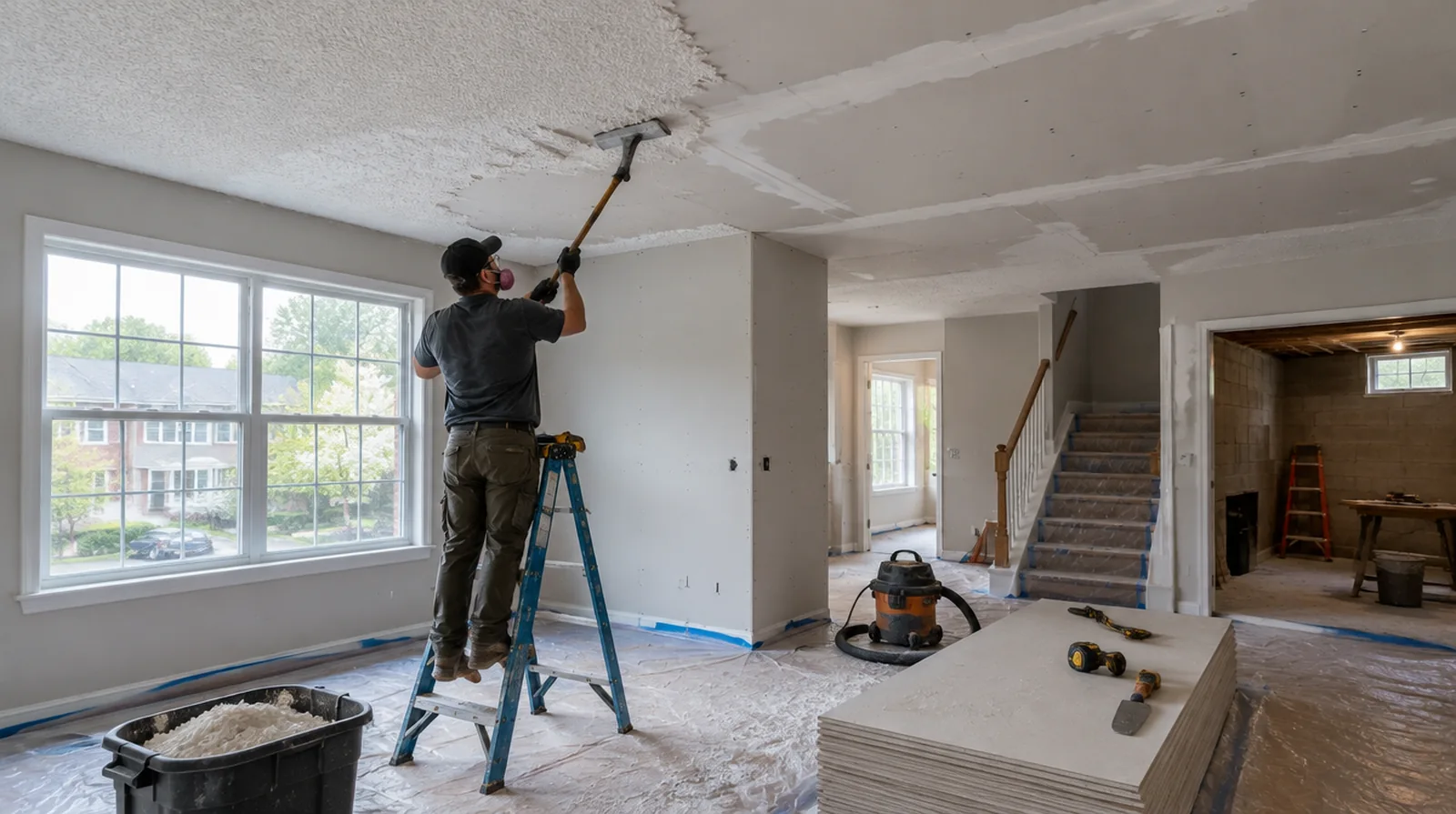
Plan fixture coordination
Light fittings, alarms and other ceiling devices may need separate handling by the suitable trade. The scope should identify who disconnects and reinstalls them rather than leaving that responsibility unclear. If a household member is sensitive to dust, discuss containment and cleaning expectations before choosing how to stage the room work.
Review ceiling condition
A textured ceiling can hide old repairs and seams that were never prepared for a smooth appearance. Allow for assessment and further finishing after safe removal exposes the original face. For an initial assessment from pictures, provide an overall room photograph and a detailed view of the defect so both context and scale are apparent.
Confirm primer and paint
The newly exposed and repaired ceiling needs an appropriate coating plan after it dries. Define whether decoration is included or whether the drywall handover ends at preparation for coatings. If the finish paint is already chosen, share its sheen and color early because those choices influence how preparation of the surface is judged.
Establish material safety
Do not disturb an older ceiling texture until any material safety concerns have been evaluated. Where asbestos could be present, arrange suitable testing and follow the applicable process before removal begins. For a limited patch requiring substantial setup, assess the complete package of access and protection instead of relating cost only to the opening size.
Separate specialist work
Removal of a confirmed hazardous coating requires the relevant specialist process, not ordinary ceiling scraping. A suitable specialist should define containment, handling and disposal before any finish restoration is planned. For a repair that crosses several surfaces, measure the affected planes separately so the estimate can explain where each finishing treatment starts and stops.
Check for painted coatings
Paint over a textured coating can change how readily the material releases. A small controlled assessment helps explain labor and potential damage to the underlying surface. If access passes through a shared space, arrange protection and a delivery route that do not unnecessarily obstruct other occupants.
Choose the final surface
The intended replacement finish should be selected before the removal and restoration work is priced. A new patterned finish and a flat smooth ceiling can need substantially differing preparation. If the proposal requires return visits, identify the purpose of each stage and the intervals during which finishing material needs to remain undisturbed.
Repair exposed imperfections
Removal can uncover damaged paper or shallow defects that must be stabilized before finishing. Review an allowance for those repairs before the decorative coating has been taken down. At the handover inspection, review the finish from ordinary room positions using the lighting conditions that were agreed for the work.
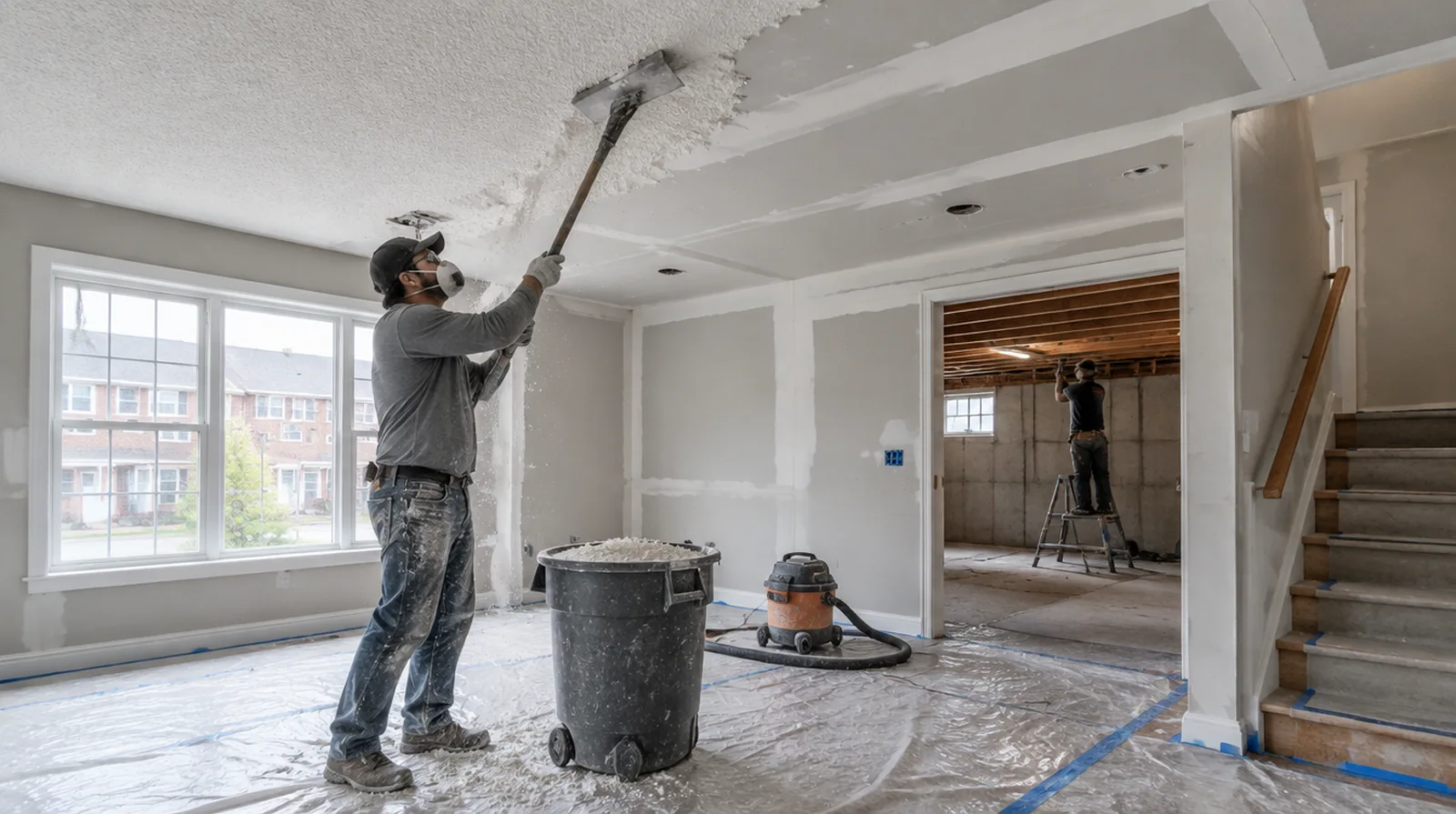
Avoid unnecessary saturation
Removal techniques should not soak and weaken the gypsum board beneath the coating. The assessment needs to consider how the original finish responds and what the substrate can tolerate. For a wall receiving a decorative covering, provide its preparation requirements early adequate for the drywall finish to support that product.
Plan cleanup and reopening
The room ought to be reviewed after debris removal and the agreed stages of finishing are complete. Allow for drying and painting time instead of assuming the space is usable immediately after scraping. If the project is part of a larger remodel, settle the sequence with flooring, trim and cabinet work before setting a final finishing date.
Project context in Germantown
Winter forced-air heat in Germantown can dry rooms quickly and open seams along upper ceilings. End-unit townhomes have more exterior walls and windows, which can mean more seasonal cracking near openings.
Scope questions before finishing
Where a surface has been painted many times, consider whether differences in texture or sheen will require a wider decorative treatment.
If an independent painter completes decoration, agree the condition of the handed over surface and assign responsibility for small final corrections.
For a project involving a building manager, confirm access hours and protection requirements before promising a start date or a short completion window.
Where existing floors will remain, specify protective measures and review the path used by panels, equipment and finishing tools.
Where a neat final edge matters, agree whether the finish ends against existing trim or whether that trim will be removed and replaced.
While a removed panel exposes the wall surface cavity, complete the necessary review of concealed work before replacement board closes the opening.
For a room with restricted airflow, plan drying conditions alongside dust protection and the comfort of people occupying neighboring spaces.
At the handover inspection, review the finish from ordinary room positions using the lighting conditions that were agreed for the work.
If a room has only limited ventilation, discuss how the finishing materials can dry without disrupting comfort or spreading dust elsewhere.
Where occupants have dust sensitivity concerns, agree containment and cleaning measures before settling the way the interior will be staged.
Where flooring is staying in place, agree on protective coverings and check that tools and material handling will not damage the noticeable finish.
For a tightly furnished room, plan temporary storage and the minimum working clearance before material is carried into the property.
Explore the Germantown drywall overview for related options, or read the project planning information before arranging the next stage.
More planning details for Germantown
Leaving a small gap above the slab helps lower-level drywall in Germantown basements resist wicking. Painting the full wall after a repair helps hide the edge between new compound and older layered paint. HOA rules in many Germantown villages limit where trucks can park and where debris can be staged.