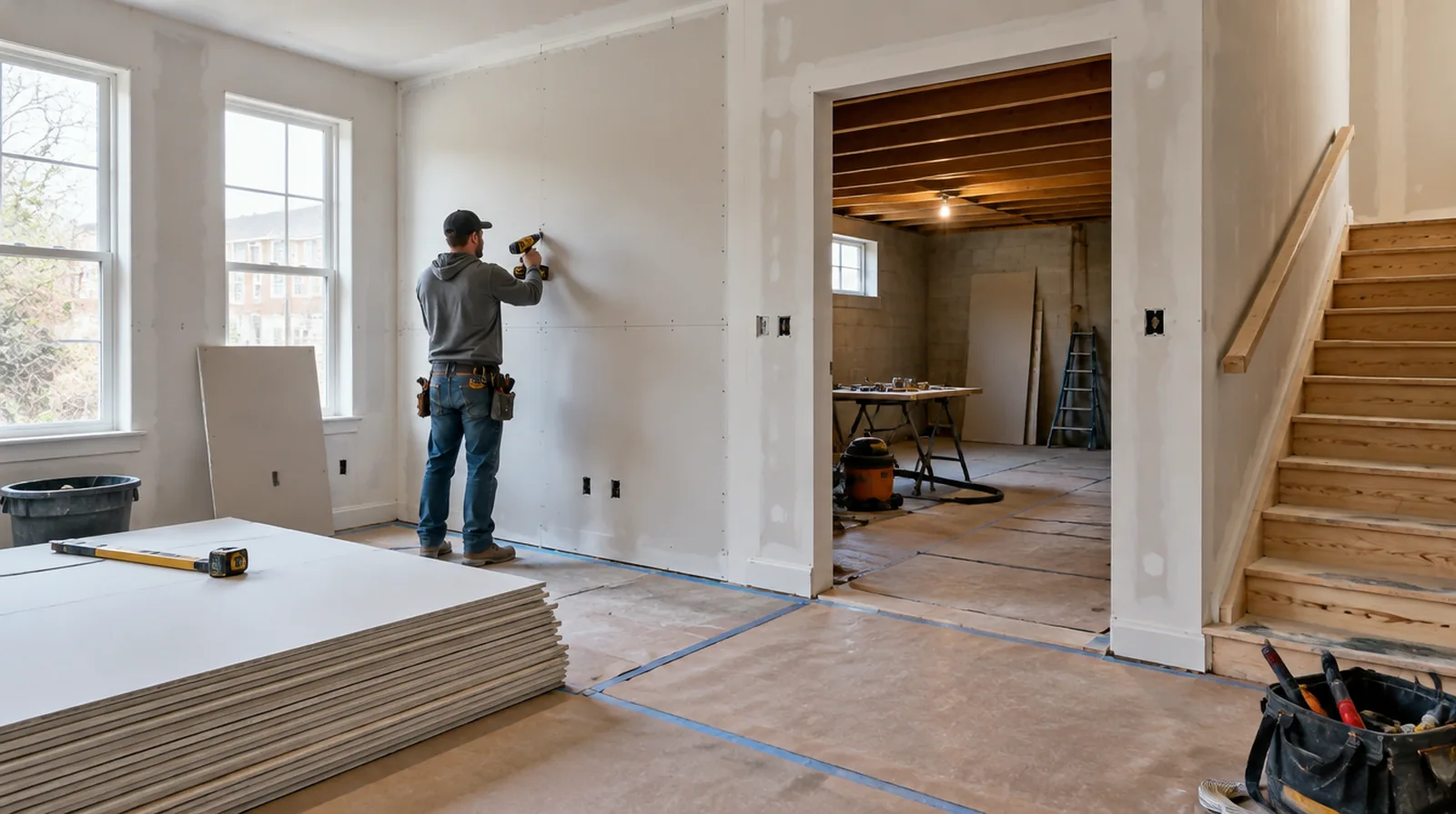
Fit corners and openings
The finished corner line depends on precise fitting before compound is applied. Select the exposed edge profile for the design and the level of contact it will receive. If occupancy must resume on a certain day, include the later primer and paint stages in the timetable as well as drywall installation and finishing.
Control fastening depth
Proper fastening holds the gypsum securely while leaving its face paper intact. Repair overdriven fixings or inadequate edge support rather than expecting compound coats to conceal those defects. When the protected room includes a doorway, check the clearance for panel movement as well as the amount of space available for finishing tools.
Select appropriate panels
Panel thickness and type depend on the intended wall or ceiling assembly and the conditions in the interior. A board described as moisture resistant does not replace waterproofing where the wet area detail requires it. Where occupants have dust sensitivity concerns, agree containment and cleaning measures before settling the way the interior will be staged.
Plan deliveries and access
Sheet dimensions have to suit the available stairs, doors and handling space as well as the finished wall. Difficult access can change labor and waste even when the room itself is relatively small. When the same defect has returned, share information about previous repair methods so the next assessment can consider why they did not last.
Confirm concealed work
Required checks on concealed services and insulation ought to be completed while the wall remains open. A readiness record and useful photographs can reduce avoidable demolition through the new installation. If the surface condition is uncertain, allow for an assessment that can distinguish stable material from layers that should never be covered.
Treat perimeter details
Connections to adjoining surfaces are part of the wall detail, not merely decorative gaps. Fire or acoustic requirements could change which sealants and perimeter treatments are appropriate. When a quote includes multiple visits, ask what happens during each stage and when the space needs to remain undisturbed between coats.
Sequence the finishing work
Allow the joint treatment to proceed in suitable conditions with adequate intervals between applications. Coordinate room ventilation and entry while the other parts of the renovation continue. For work spread across differing planes, record their dimensions separately and describe the boundary of the treatment on each surface.
Define the finish level
Hanging board and delivering a ready for painting wall are distinct stages that ought to be described separately. The chosen sheen and grazing light conditions could call for a higher surface standard in a prominent room. When photographs are used for an initial discussion, include a wide room view as well as a close view so scale and surrounding finishes are understandable.
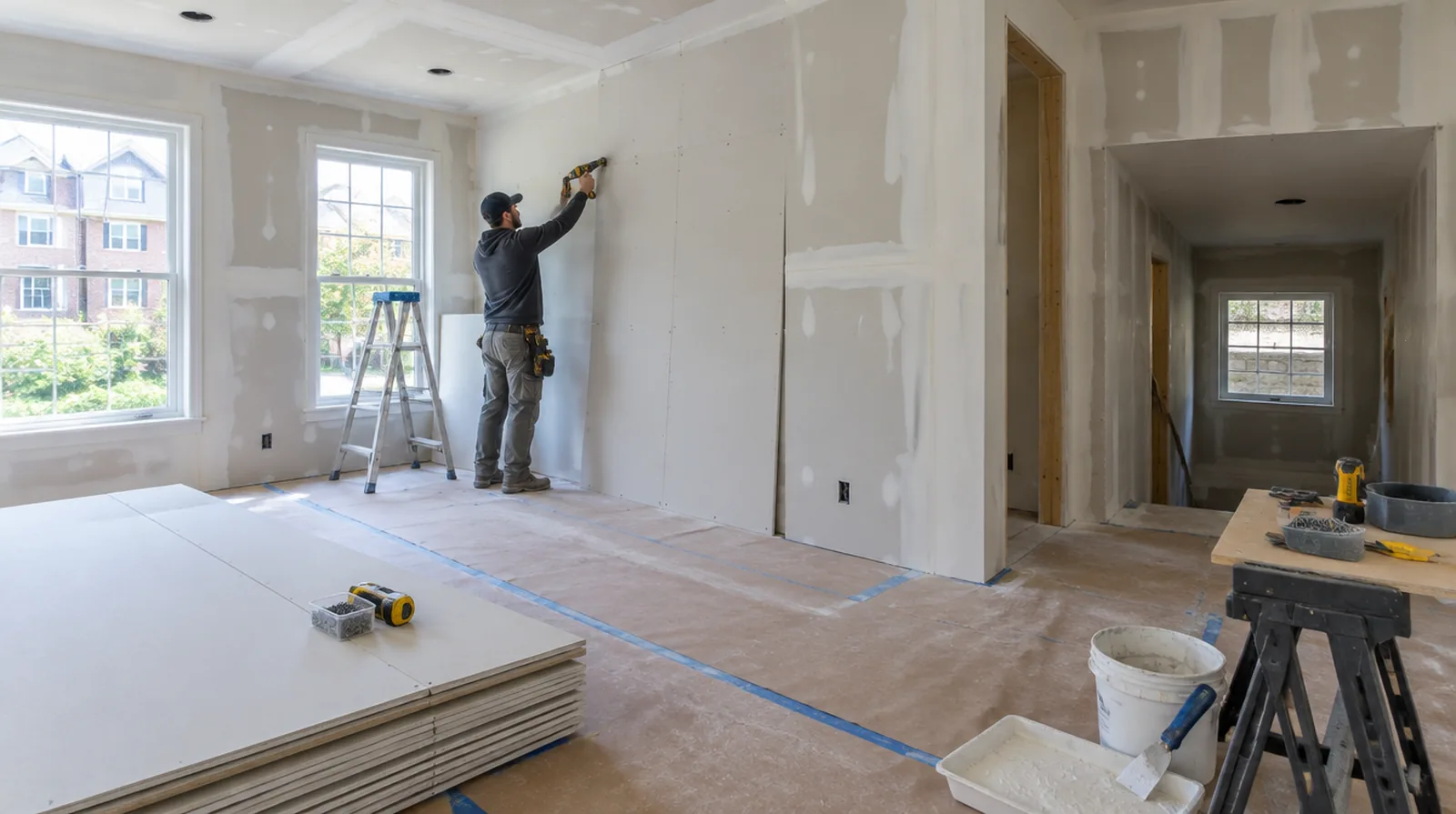
Lay out the joints
A thoughtful sheet layout limits awkward seams and keeps weak transitions away from the corners of openings. The installer should consider both panel support and the finishing work that follows. If the completion date matters most, allow for intervals between coats as well as active labor instead of assuming the entire process happens continuously.
Measure the complete assembly
Board quantities depend on wall height, ceiling coverage, openings and the proposed orientation of the sheets. A measured layout helps reduce narrow infill strips and unneeded joints around doors. When damage followed other building work, describe the nearby alterations and the sequence between those changes and the first noticeable defect.
Project context in Germantown
Humid Montgomery County summers keep basements damp enough to slow drying without a dehumidifier. End-unit townhomes have more exterior walls and windows, which can mean more seasonal cracking near openings.
Scope questions before finishing
For a repair that crosses several surfaces, measure the affected planes separately so the estimate can explain where each finishing treatment starts and stops.
If the ceiling or wall includes fittings, identify the person responsible for removing and reinstalling each item before the work begins.
At the handover inspection, review the finish from ordinary room positions using the lighting conditions that were agreed for the work.
When a quote includes multiple visits, ask what happens during each stage and when the room needs to remain undisturbed between coats.
If a room has only limited ventilation, discuss how the finishing materials can dry without disrupting comfort or spreading dust elsewhere.
If the completion date matters most, allow for intervals between coats as well as active labor instead of assuming the entire process happens continuously.
If the problem developed after another renovation, explain which nearby materials or building systems changed before the damage became visible.
If there is a fixed move in date, reserve enough time for the coating stages after drywall work rather than counting only the installation period.
If the original finish is unusual, keep a small reference sample or a close photograph to support the discussion about blending and restoration.
If materials must cross common building areas, plan the protection and access route so other occupants are not needlessly obstructed by deliveries.
When photographs are used for an initial discussion, include a wide room view as well as a close view so scale and surrounding finishes are understandable.
At an edge beside built in furniture, state whether the obstruction will be removed or whether finishing stops at the section that can be reached.
Explore the Germantown drywall overview for related options, or read the project planning information before arranging the next stage.
More planning details for Germantown
Winter forced-air heat in Germantown can dry rooms quickly and open seams along upper ceilings. HOA rules in many Germantown villages limit where trucks can park and where debris can be staged. Many Germantown homes from the 1980s have been repainted several times, which affects how a patch blends.