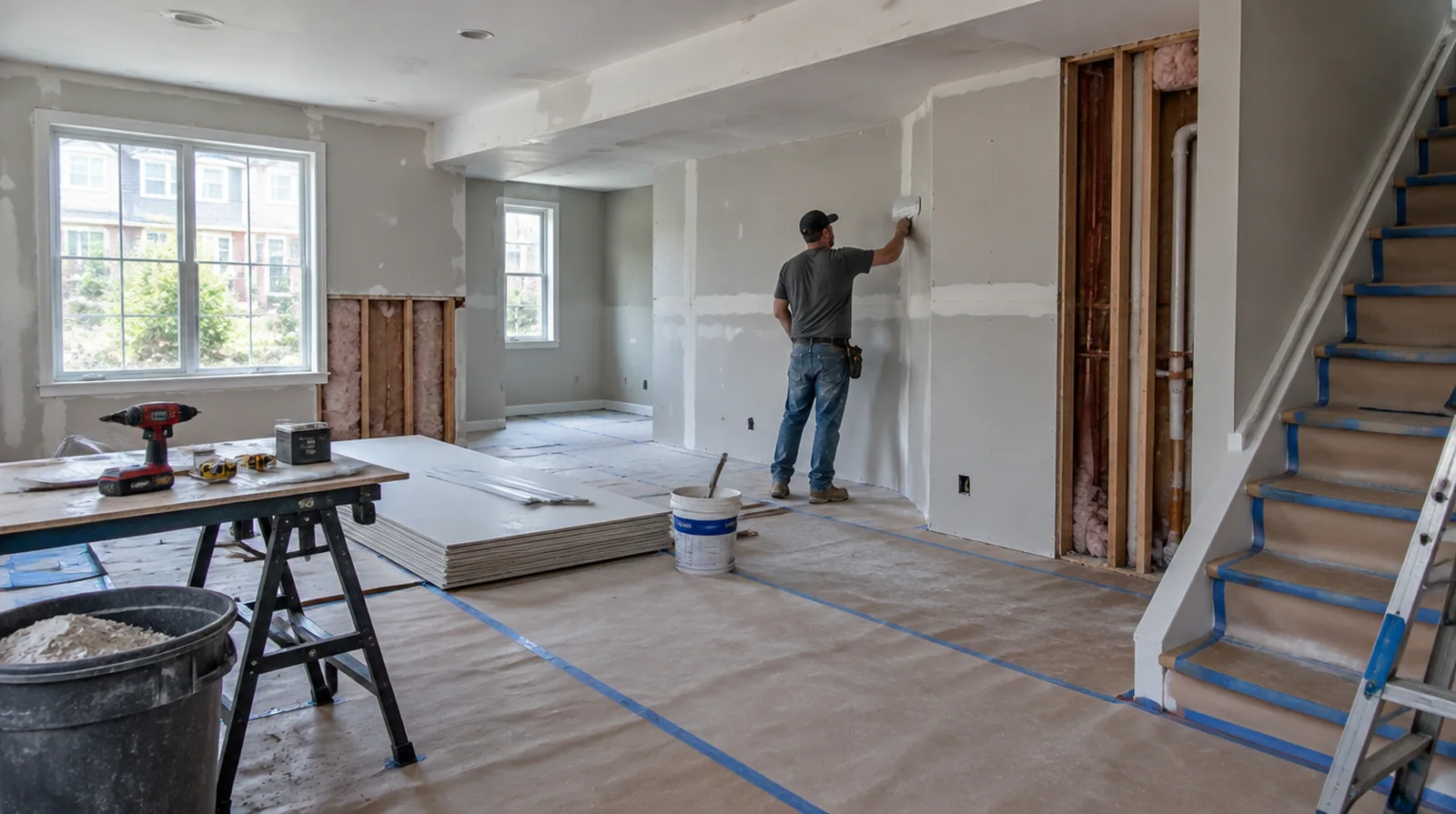
Treat remaining discoloration
An old dry mark may bleed through new decoration unless an appropriate primer is selected. Verify that the stain is inactive before choosing a coating system for the repaired surface. At a ceiling or wall containing fittings, assign removal and reinstatement duties for the affected devices before repair access is needed.
Assess material condition
Look for changes in panel strength and face condition as well as the visible color of a mark. The visible mark does not always show the full extent of the affected cavity. If the problem developed after another renovation, explain which nearby materials or building systems changed before the damage became noticeable.
Agree on decorative boundaries
Repairing the damaged board and restoring a uniform paint finish are related but distinct tasks. A ceiling or wall repaint might need to extend beyond the removed section to look consistent. If the proposal requires return visits, identify the purpose of each stage and the intervals during which finishing material needs to remain undisturbed.
Finish after moisture control
Apply joint treatment to sound, sufficiently dry materials after the moisture issue has been addressed. Give each finishing layer time to dry instead of trapping dampness under additional material. In a room with little free floor space, identify temporary storage for belongings and establish adequate clearance for the work before delivery.
Inspect concealed components
Insulation, electrical work and plumbing exposed during removal may require separate assessment or replacement. Resolve the condition of exposed insulation, wiring and plumbing before closing the wall. Before comparing two proposals, check that both include the same protection, finishing and cleanup boundaries instead of comparing totals alone.
Resolve the water source
Replacement drywall should follow correction of the leak, condensation or other source that caused the damage. A cosmetic cover will not stop water from entering the same assembly again. If access passes through a shared space, arrange protection and a delivery route that do not unnecessarily obstruct other occupants.
Define selective removal
Removing a controlled section provides access for assessment while preserving material that remains sound. The cut boundary also needs to accommodate backing and a practical finished transition. When damage followed other building work, describe the nearby alterations and the sequence between those changes and the first visible defect.
Match the board assembly
Use replacement panels consistent with the original thickness and the assembly that must be restored. Water resistant products do not remove the need to correct the conditions that caused the damage. When the history of a repair is uncertain, note when it became visible and whether its appearance has altered across distinct seasons.
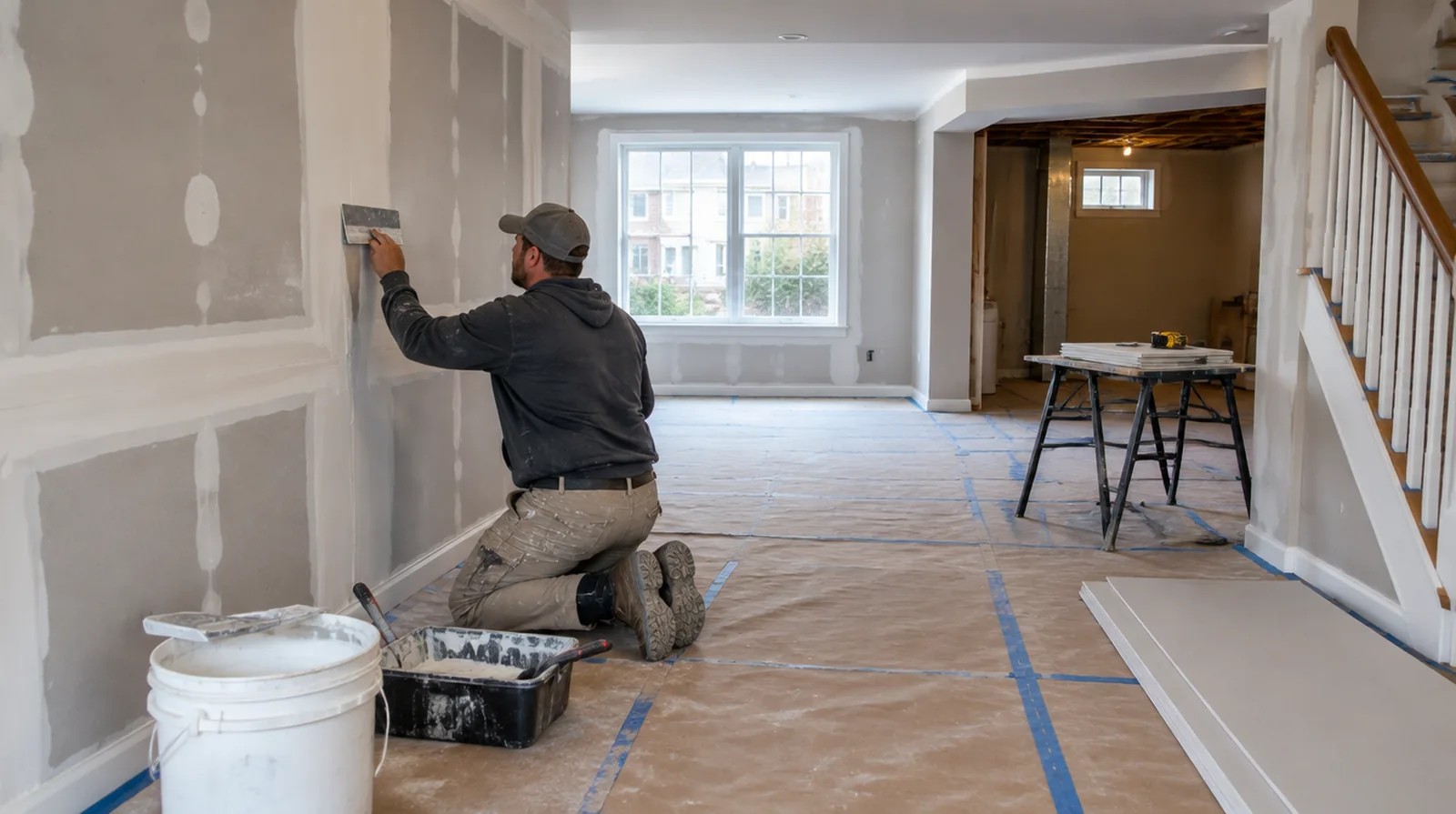
Keep contamination separate
Flood water and suspected microbial growth require evaluation beyond ordinary cosmetic patching. Obtain suitable remediation advice about safe containment and removal before arranging ordinary drywall restoration. When a quote includes multiple visits, ask what happens during each stage and when the interior needs to remain undisturbed between coats.
Verify drying readiness
A dry looking outer face does not prove that concealed framing and insulation are ready to enclose. Make clear which professional confirms drying readiness before the cavity is covered again. For a limited patch requiring substantial setup, assess the complete package of access and protection instead of relating cost only to the opening size.
Project context in Germantown
HOA rules in many Germantown villages limit where trucks can park and where debris can be staged. End-unit townhomes have more exterior walls and windows, which can mean more seasonal cracking near openings.
Scope questions before finishing
If a distinct painter completes decoration, agree the condition of the handed over surface and assign responsibility for small final corrections.
When building management controls access, agree delivery hours and common area protection before committing to a start or finish date.
Where the wall meets fixed furniture, clarify whether removal is included or whether the finish will terminate at the accessible edge.
For a planned new wall mounted fixture, resolve its backing requirements while the cavity remains open instead of cutting into completed drywall later.
For a surface that will receive wall covering, share the product requirements early so the finishing stage supports the planned decorative treatment.
For a wall receiving a decorative covering, provide its preparation requirements early sufficient for the drywall finish to support that product.
If the room will remain occupied, identify a practical separation between the project space and the space that still needs daily access.
Where a surface has been painted many times, consider whether differences in texture or sheen will require a wider decorative treatment.
If the ceiling or wall includes fittings, identify the person responsible for removing and reinstalling each item before the work begins.
If a household member is sensitive to dust, discuss containment and cleaning expectations before choosing how to stage the space work.
If the coating stability is unclear, assess which layers are adequately bonded and which should be removed rather than simply hidden beneath new material.
Where occupants have dust sensitivity concerns, agree containment and cleaning measures before settling the way the room will be staged.
Explore the Germantown drywall overview for related options, or read the project planning information before arranging the next stage.
More planning details for Germantown
Humid Montgomery County summers keep basements damp enough to slow drying without a dehumidifier. Interior units share walls on both sides, so noisy work should be scheduled considerately. Leaving a small gap above the slab helps lower-level drywall in Germantown basements resist wicking.